

Trust and company structures are not assessed the same way by every lender. Some lenders understand complex structures and self‑employed income well, while others apply a strict “one‑size‑fits‑all” policy, which can lead to unnecessary delays or declines.

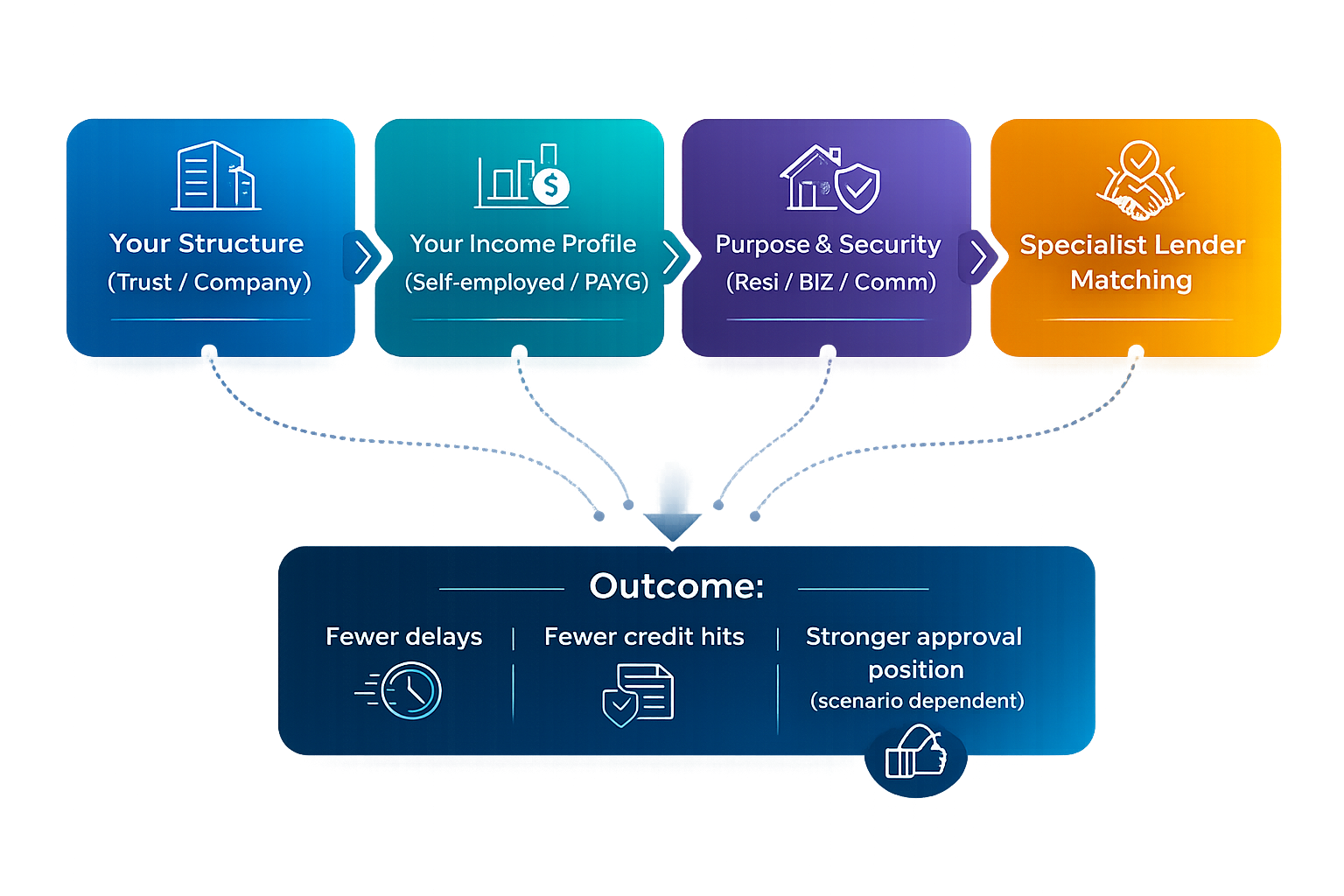
As trust and business lending specialists, we maintain relationships with lenders suited to different trust and business scenarios. Our role is to match your structure, income profile, and lending purpose to the lender most likely to support it before an application is submitted.

This approach reduces delays, avoids unnecessary credit enquiries, and gives you the best chance of approval with the right lender the first time.

Common scenarios where the right lender makes a major difference

1) Self‑employed borrowers using trusts or companies
     Some lenders are specifically equipped to assess self‑employed and trust structures properly. Depending on your situation, the right lender may:

  • accept alternative documentation options
  • assess trust and company income more accurately
  • apply practical servicing methods for variable income
  • understand how business cashflow works (not just payslips)

2) Time‑sensitive approvals and urgent settlement deadlines
      When time is critical, standard bank processing can become the deal‑killer, especially with trusts or complex structures. Specialist lenders may offer:

  • faster assessment teams experienced with complex structures
  • quicker credit decisions when deadlines can’t be moved
  • streamlined processes to support urgent settlements
  • a realistic solution when bank turnaround times won’t work

3) Commercial, business‑purpose, or investment scenarios
      Business lending is assessed differently from standard residential lending, and not all lenders have the appetite. The right lender may provide:

  • business and commercial lending specialists
  • different servicing criteria suited to investment or business purposes
  • multiple documentation pathways
  • genuine policy appetite for trust and business lending

4) Incomplete, irregular, or complex financials
      Real‑world business financials don’t always fit neatly into bank templates. That doesn’t mean the deal is impossible, it usually means it needs the right lender and the right presentation. Some lenders can:

  • work with what’s available
  • accept alternative verification where required
  • apply more flexible servicing for irregular income
  • assess the real story behind the numbers, not just policy checkboxes

5) Why specialist matching matters
      With trust and business lending, the lender you choose can be just as important as your income and financials.
Different lenders assess trust structures, business income, and documentation requirements in very different ways. A lender that approves one trust scenario may decline another, even when the overall financial position is strong.
Submitting an application to the wrong lender can result in:

  • unnecessary delays and extra documentation requests
  • a decline that may require re‑applying elsewhere
  • additional credit enquiries, which can impact your credit profile
  • settlement risk if timeframes are tight

This is why we focus on specialist lender matching from the beginning. We assess your structure and purpose first, then submit to the lender most suited to your scenario, so your application is positioned correctly, and you get the strongest possible outcome with the least disruption.
Next step: Share your structure, purpose, and available documents, and we’ll map the cleanest pathway and lender lane for your scenario.