

What is an ETF?
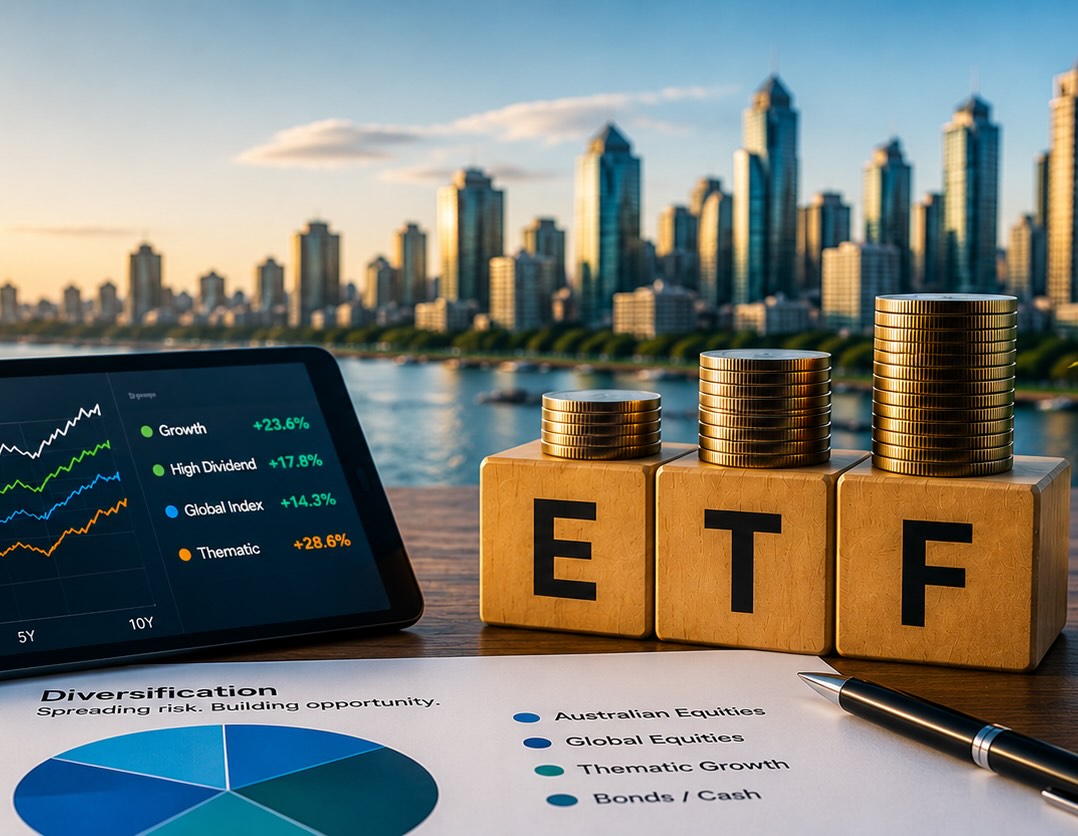
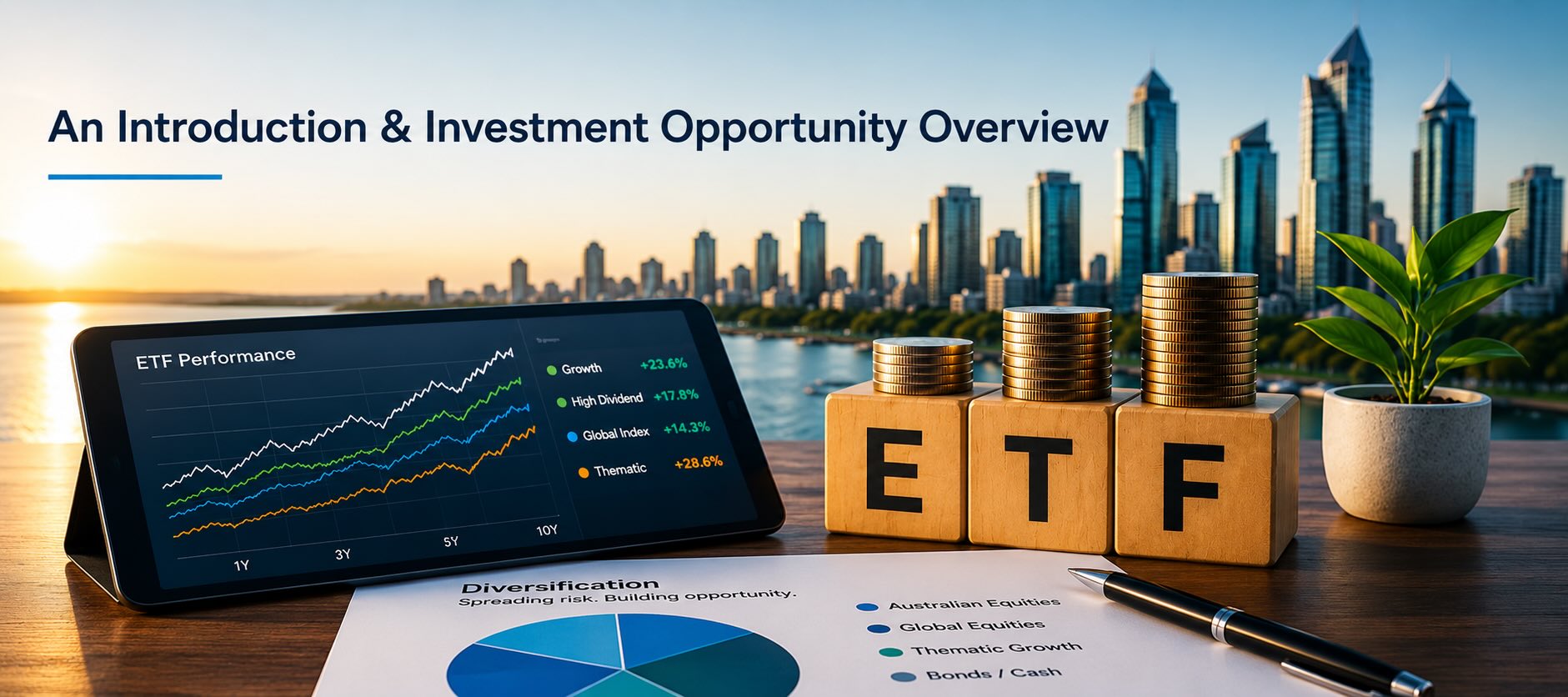
An Exchange Traded Fund (ETF) is a single investment you buy and sell on the ASX that holds a basket of assets — such as many different shares, bonds, or commodities. Rather than buying a single company’s stock, an ETF gives you instant diversification, regular distributions (often quarterly), and easy liquidity — you can sell units on-market for cash whenever you need to.
Think of it this way: instead of betting on one horse, an ETF lets you back the entire field in a chosen race — whether it’s a specific theme such as technology companies, high-dividend Australian stocks, copper miners, or the energy transition sector, or an index.
Why Use ETFs?
- Foundation for the portfolio — reduces reliance on picking individual speculative shares.
- Income stream potential via periodic distributions (like rent, but from shares) — often with franking credits attached for Australian ETFs.
- Flexibility — invest part now and keep some cash aside; sell ETF units later if cash is needed.
- You don’t have to invest all cash at once — stage your purchases over time to reduce the impact of short-term market volatility.
How Do ETFs Work?
- You purchase units in the ETF through your broker or online trading platform — just like buying shares on the ASX.
- The ETF manager pools money from all investors and uses it to buy a basket of underlying assets aligned with the fund’s strategy.
- The value of your ETF units rises and falls with the performance of those underlying assets.
- Most ETFs distribute income (dividends or interest) periodically to investors — often quarterly.
- You can buy or sell your ETF units on the ASX at any time during trading hours.
Key Benefits of ETFs
- Instant Diversification
A single ETF can give you exposure to dozens — sometimes hundreds — of companies across a sector or theme. This significantly reduces your risk compared to owning individual stocks.
- Low Cost
Management fees (the MER) typically range from 0.20% to 0.70% per year — far lower than actively managed funds or the hidden costs of frequent share trading.
- Income & Franking Credits
Many Australian equity ETFs — such as VHY — distribute franked dividends, which may reduce the tax you pay depending on your personal tax position. This makes them particularly attractive for income-focused investors or those in lower tax brackets.
- Simplicity & Accessibility
You do not need to be an expert analyst to invest in a sector you believe in. ETFs do the research and stock selection for you, and can be purchased with as little as a few hundred dollars.
- Liquidity & Flexibility
Because ETFs trade on the ASX during market hours, you can buy or sell them at any time. You also don’t need to invest everything at once — you can start with a portion and add more over time, keeping some cash aside for known near-term needs.
- Transparency
Most ETFs publicly disclose their holdings regularly, so you always know what you own. There are no hidden surprises.
- Tax Efficiency
ETFs are generally more tax-efficient than actively traded portfolios. Because the fund does not frequently buy and sell its underlying assets, capital gains distributions tend to be lower. ETFs held within a superannuation environment can also attract concessional tax treatment.
ETFs vs. Direct Share Picking
The table below summarises how ETFs compare to selecting individual shares:
You can find more here in comparison:
ETF Types to Consider
Choose the type that suits your goals and risk profile:
- High-Dividend Australian Equity ETFs — Focus on income (often franked) from large local companies; useful as an income anchor.
- Broad Market ‘Core’ Equity Or Index ETFs (AU or Global) — Diversified growth across many sectors and countries; good as a core holding to balance single-stock risk.
- Thematic ETFs — Target specific long-term structural trends such as energy transition metals, copper miners, robotics & AI, and battery technology: higher risk but strong long-term tailwinds.
- Bond / Cash ETFs — Provide defensiveness and stability; distributions reflect interest rates; handy for near-term spending needs or more conservative investors.
A Simple Starting Mix (illustrative only)
- Core: a broad AU or global equity ETF for diversification.
- Income sleeve: a high-dividend AU ETF for franked income
- Thematic growth: one or two thematic ETFs aligned with long-term trends you believe in.
- Cash buffer: keep some funds uninvested (or in defensive ETFs) for known near-term needs.
Important Considerations
- All investments carry risk. The value of your ETF units can go down as well as up, and past performance is not a guarantee of future returns.
- Thematic ETFs carry sector concentration risk — if the sector underperforms, the ETF will too.
- Currency risk may apply if the ETF holds international assets not hedged back to Australian dollars.
- Liquidity in smaller or more niche ETFs may be lower than in broad market funds.
Next Steps
Reach out to our investment team.
Please feel free to reach out to discuss this further. We look forward to helping you take advantage of these investment opportunities in a considered and tax-effective way.